
Decision Guide
Ask the company for its Connecticut home improvement contractor (HIC) registration number, then search it or the business name on eLicense, the state's free lookup at elicense.ct.gov, and confirm it's active. Connecticut requires a registered contractor for residential garage door work over $200. Registration means insurance and a fee are on file, not that the work is good.
Published 2026-10-11 · Updated 2026-10-11
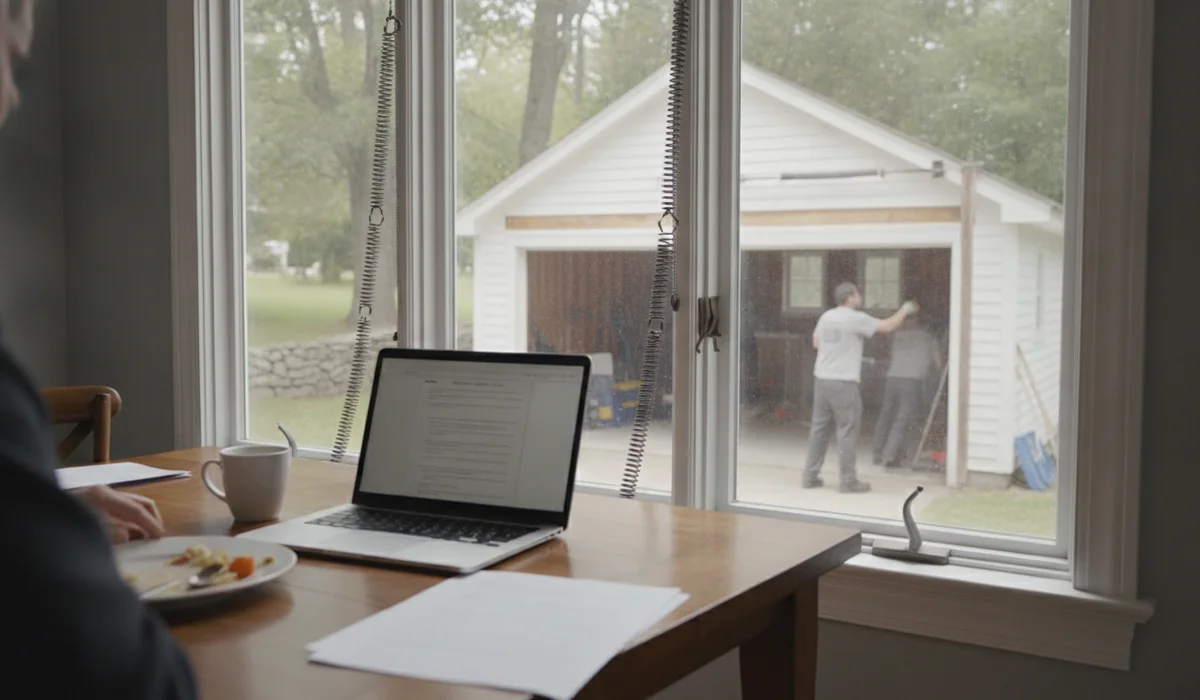
Connecticut is one of the states where checking a garage door company takes two minutes and costs nothing. The state’s Department of Consumer Protection (DCP) registers home improvement contractors, and garage doors count as home improvement work. Here’s how to check, and what the result does and doesn’t tell you.
Step 1: Ask for the HIC number
Every Connecticut home improvement contractor has an HIC registration number, and DCP requires it to appear in advertising and on contracts. Ask for it on the phone, before anyone comes out. A legitimate company will give it to you without hesitation. If you’re hiring through a referral line (including ours), ask the company you’re connected with for its number.
Step 2: Look it up on eLicense
- Go to eLicense, the state’s free license and registration lookup.
- Search by the registration number or the business name.
- Check that the credential is a Home Improvement Contractor registration and its status is active.
- Check that the business name on the registration matches the name on the truck, the invoice, and the contract.
Our Connecticut garage door company directory lists garage door businesses with active registrations, from the same state records, so you can see who’s registered near you before you call.
What registration does and doesn’t mean
Registration is required. DCP’s guidance says residential home improvement work over $200 needs a registered contractor, and its list of qualifying work specifically includes garages and doors.
Registration is not a skills test. Connecticut doesn’t require an exam or training for HIC registration. DCP tells homeowners to ask for proof of general liability insurance of at least $20,000. A registration tells you the company has filed with the state, carries insurance, and can be traced. It doesn’t tell you the company is good at its job.
That’s why registration should be the first filter, not the only one. After it, compare written quotes, ask about warranties, and trust your read of how the company explains the problem.
The contract rules that protect you
For home improvement work over $200, Connecticut law and DCP guidance require the contract to be:
- In writing, signed by you and the contractor, and dated.
- Complete, with the contractor’s name, address, and HIC registration number.
- Specific about the work and the price, with start and completion dates.
- Accompanied by a notice of cancellation: you can cancel until midnight of the third business day after signing, and Saturday counts. Under DCP’s guide, you don’t owe for work done in that window if you cancel.
The only exception to the cancellation right is a bona fide emergency where you start the contract and write, in your own words, that you need the work immediately. Don’t sign that for anything that can wait.
For bigger jobs like a new garage door, DCP suggests limiting the deposit to about one-third of the price.
If something goes wrong: the Guaranty Fund
DCP’s Home Improvement Guaranty Fund can reimburse eligible homeowners up to $25,000 when a project with an actively registered contractor goes wrong. DCP reported the fund returned an additional $3 million to consumers in 2025. It only applies to registered contractors, which is the best reason of all to check first.
Red flags
The Better Business Bureau has warned about garage door repair scams. Common warning signs:
- No HIC number, or a business name that doesn’t match the registration.
- Several generic business names for what seems to be the same company.
- A very low advertised service fee, followed by pressure to approve expensive parts on the spot.
- Quotes far above published ranges; see our cost guide.
- No written contract, no cancellation notice, or a demand for full payment up front.
To report a contractor, contact the Connecticut Department of Consumer Protection.
Sources
- CT DCP, what qualifies as home improvement
- CT DCP, home improvement projects require a contract and registered contractor (May 2025)
- CT DCP, consumer protection warns homeowners planning remodeling projects (May 2026)
- CT DCP, Home Improvement Guide
The bottom line
If you need garage door help now, call (860) 791-1424 and we'll try to connect you with a participating independent garage door company that serves your area. That company inspects the door and quotes the job itself. Until then, keep people and cars out from under the door and don't touch the springs or cables.