
Skip to content

(860) 791-1424Free referral line, independent service. How it works

Connecticut Garage Door Repair

Garage Door Opener Repair in Connecticut

An opener that hums but won't lift, a door that closes and pops back up, or a remote that stopped working. Here's what usually causes each one, what repair costs, and when a new opener is the better buy.

Free referral anywhere in Connecticut — Call (860) 791-1424

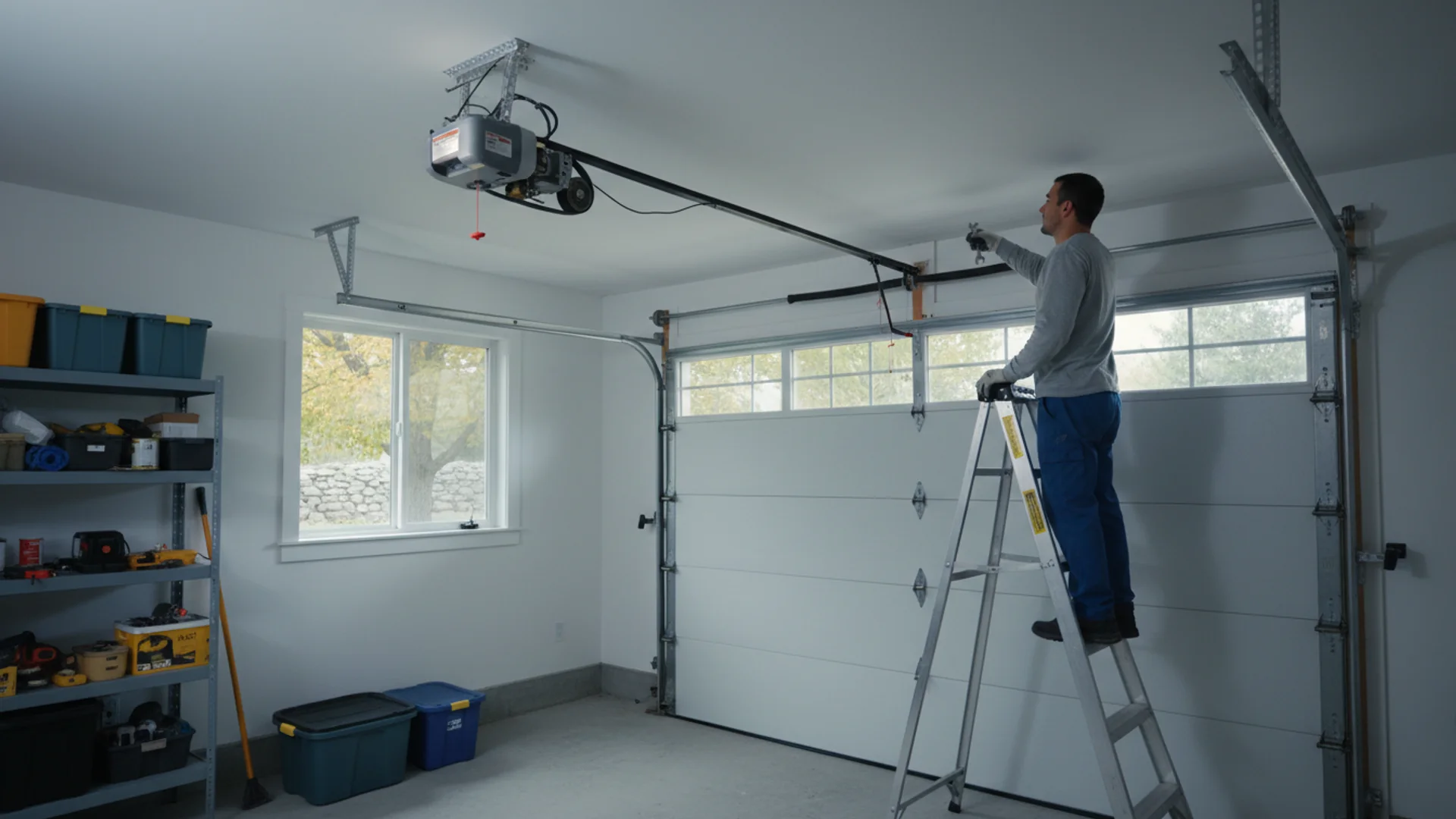
Technician on a stepladder testing a ceiling-mounted belt-drive garage door opener in an attached Connecticut garage

Free referral · No obligation

Get Help With Your Garage Door Opener

Call to be connected with a participating independent garage door company that serves your area. No obligation to hire.

Last updated: 2026-10-11

Connecticut Garage Door Repair is a referral service that connects Connecticut homeowners with participating garage door companies for garage door opener repair. The opener is the motor and rail that move the door, but it isn't meant to lift the door's weight: the springs do that. That's why the first question with any opener problem is whether the opener is actually the part that failed.

Is it the opener or the door?

Before anyone replaces an opener, the door itself should be checked. An opener straining against a broken spring, a door frozen to the floor, or a track that's bent will look like an opener failure. A good technician disconnects the opener (with the door closed) and checks that the door is balanced and moves freely by hand before working on the motor.

If you heard a loud bang before the opener stopped working, start with spring repair, not the opener.

Common opener problems and what causes them

These are the opener calls technicians see most:

  • Door starts down, then reverses. Usually the photo eyes: dirty lenses, a sensor bumped out of line, or something in the beam. Sometimes the close-force or travel limit needs adjusting, which a technician should do because those settings are part of the safety system.
  • Motor hums, door doesn't move. A stripped drive gear (common on older chain and screw drives), a broken spring, or a door that's locked or frozen.
  • Nothing happens at all. No power at the outlet, a tripped GFCI, a failed logic board, or a burned-out motor.
  • Wall button works, remote doesn't. Dead remote battery, the opener's lock or vacation mode switched on at the wall console, or a remote that lost its programming.
  • Door opens partway and stops. Travel limits out of adjustment, a binding track, or the opener's force sensing reacting to a door that has become hard to lift.
  • Loud grinding or chattering. A loose chain, worn rail parts, or a motor near the end of its life.

The safety rules every opener has to meet

Federal rule 16 CFR Part 1211 requires residential openers made since January 1, 1993 to include external entrapment protection, most often a pair of photo eyes mounted 4 to 6 inches above the floor that stop and reverse the door if something breaks the beam. The rule grew out of the Consumer Product Safety Improvement Act of 1990, which tied opener safety to the UL 325 standard.

Two practical consequences: never tape over, unplug, or bypass the photo eyes to stop a door from reversing, and if your opener is old enough that it has no photo eyes at all, replacing it is a safety upgrade, not just a convenience.

Repair or replace the opener?

HomeAdvisor's June 2026 guidance is a reasonable rule of thumb: repair an opener that's under about eight years old when the repair costs well below a new unit, and consider replacing one that's 10 to 15 years old or needs an expensive part like a logic board or motor. New openers installed run about $250 to $500, more for smart or wall-mount models.

Drive types differ. HomeAdvisor's installation ranges are $150 to $250 for chain drive, $160 to $450 for belt drive, and $250 to $500 for screw drive. Belt drives are the quiet choice for a garage under a bedroom, as in many raised ranches and split-levels.

When to call about an opener

  • The door reverses even with the photo-eye lenses clean, aligned, and unblocked.
  • The motor hums or clicks but the door doesn't move, and the springs look intact.
  • Nothing works from the wall button or the remote, and the outlet has power.
  • The opener grinds, chatters, or smells hot.
  • Your opener has no photo eyes, or the door doesn't reverse when it touches an object on the floor.

What garage door opener repair costs

HomeAdvisor's June 2026 data puts opener repair at an average of $236, with most repairs between $124 and $370 and a wider range of $50 to $550. A replacement remote is about $30 to $40; smart-opener repairs run $120 to $330. Connecticut labor generally lands in the upper half of national ranges.

  • The failed part: a sensor adjustment or remote is cheap; a logic board or motor is the expensive end.
  • The opener's age and brand: parts for older or discontinued models can be hard to find, which pushes toward replacement.
  • Drive type: gears and sprockets on chain and screw drives wear differently than belt drives.
  • Whether the door is the real problem: a spring or track repair may be needed first.
  • Timing: evening and weekend calls usually cost more.
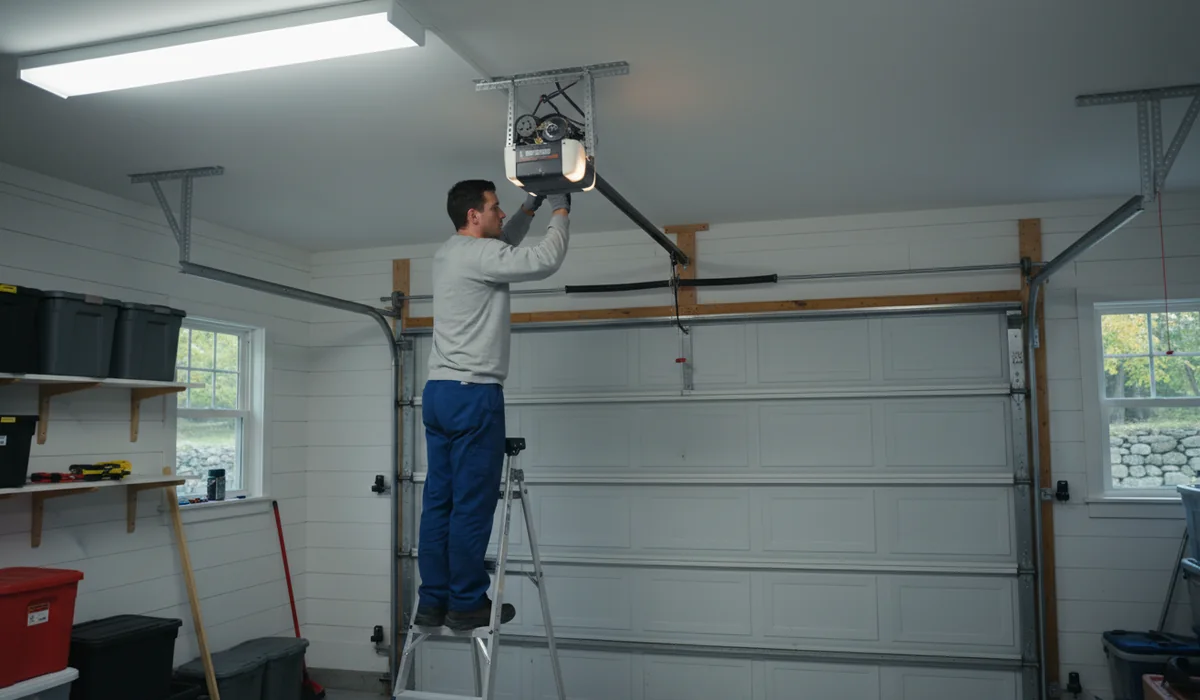
Garage door photo-eye sensor mounted low on the door track beside a concrete garage floor

What to check before you call

  1. Make sure the opener is plugged in and the outlet works (a GFCI outlet in the garage may have tripped).
  2. Check that the lock or vacation button on the wall console isn't switched on.
  3. Wipe the photo-eye lenses and make sure both indicator lights are steady and nothing is in the beam.
  4. Try a fresh battery in the remote.
  5. If the door is closed and you heard a bang, look at the springs from the floor. If one is broken, stop and call; don't run the opener.

Questions to ask before you hire

  • What is your Connecticut HIC registration number?
  • Did you check the springs and door balance before diagnosing the opener?
  • What part failed, what does it cost, and is the opener worth repairing at its age?
  • If you recommend a new opener, which model and drive type, and what's included in the price?
  • What warranty comes with the part, the labor, and any new opener?

Related garage door guides

Straight answers

What you can safely check vs. when to call

The safe homeowner checks are short on purpose. Springs, cables, and the brackets they attach to hold enough tension to cause serious injury, so anything involving them belongs to a technician.

What the door is doingSafe for you to checkCall a garage door companyStop and keep everyone clear
Won't open at allOpener plugged in and the outlet works; door lock not engaged; wall button vs. remoteYou heard a loud bang, or the opener hums but the door doesn't moveThe door is open and won't come down: don't walk under it
Starts to close, then reversesPhoto eyes 4 to 6 inches off the floor: clean the lenses, make sure nothing blocks them and both lights are steadyIt still reverses with the eyes clear and alignedNever tape over or bypass the photo eyes
Hangs crooked or one side is lowerNothing. Look from a distance for a loose or snapped cableRight away, before using it againDon't run the opener; a crooked door can jump the track
Off the trackNothing past unplugging the openerRight awayKeep cars and kids out of the doorway
Opener strains or the door barely liftsFrom the floor, look at the springs above the door for a gap in the coilA broken or worn-out spring is the usual causeDon't lift it by hand or pull the release with the door open: it can drop
Gap in a spring above the doorNothing. A visible gap in the coil means the spring brokeAlwaysDon't touch the spring, the cones, or the bottom brackets

General guidance, not a diagnosis. Photo-eye height comes from the federal opener safety rule, 16 CFR Part 1211. If something looks unsafe, treat it as unsafe.

What to expect

What an opener service call usually involves

Every door is different. These are the stages most residential garage door repairs go through.

  1. You describe the symptom

    What the opener does (hums, clicks, reverses, nothing at all), how old it is, and the brand if you can see it on the motor housing.

  2. Door check first

    With the door closed, the technician disconnects the opener and checks the springs, balance, rollers, and track, so the opener isn't blamed for a door problem.

  3. Opener diagnosis

    Power, logic board, motor, drive gear or belt, travel and force settings, wall console, remotes, and the photo eyes.

  4. A written price

    For work over $200, Connecticut requires a written, signed contract with the contractor's HIC number and your three-day right to cancel.

  5. Repair and safety test

    After the repair or new opener, the auto-reverse and photo eyes are tested, as the federal opener rule requires them to work.

How the referral works

How our garage door referral line works

  1. You call the number on this site

    Have the address or ZIP code ready, plus what the door is doing: stuck, crooked, reversing, off its track, or making a bang when it tried to open.

  2. Your call is routed to a participating company

    Your call is connected with a participating independent garage door company that serves your area, if one is available. We don't send anyone ourselves, and the companies in our name-only directory are not our participants.

  3. You deal with that company directly

    The company inspects the door, quotes the job, and does any work you agree to under its own business name, HIC registration, and insurance. You decide whether to hire them. There is no obligation.

Good to know: availability depends on which participating companies cover your ZIP code and when you call. Whoever you hire, ask for their Connecticut HIC registration number and look it up on eLicense before you sign. Our guide to checking a garage door company shows how.

Get Help With Your Garage Door Opener

Call and we will try to connect you with a participating independent garage door company that serves your area.

Questions

Garage Door Opener Repair questions

How much does garage door opener repair cost in Connecticut?

HomeAdvisor's June 2026 data puts the national average at $236, with most opener repairs between $124 and $370. Simple fixes like a remote or sensor adjustment cost less; a logic board or motor costs more. Connecticut prices usually sit in the upper half of national ranges.

Why does my garage door go down and then back up?

Most often the photo eyes near the floor are dirty, misaligned, or blocked, so the opener thinks something is in the way. Clean the lenses and make sure both lights are steady. If it still reverses, the close-force or travel settings may need adjustment by a technician. Never bypass the sensors.

Should I repair or replace my garage door opener?

As a rule of thumb, repair an opener under about eight years old when the repair costs well below a new one, and consider replacing one that's 10 to 15 years old or needs a major part. HomeAdvisor puts a new installed opener at roughly $250 to $500.

My opener hums but the door won't move. What's wrong?

It's often a stripped drive gear inside the opener, but a broken spring or a door that's locked or frozen to the floor causes the same symptom. Stop pressing the button, unplug the opener, and look at the springs from the floor. If a spring is broken, the opener isn't the problem.

Does Connecticut require a license for garage door repair?

Connecticut requires a home improvement contractor (HIC) registration with the Department of Consumer Protection for residential work over $200, and garage doors are listed as home improvement work. Registration requires liability insurance and a fee, not a trade exam. Ask for the HIC number and verify it on eLicense.

Call (860) 791-1424 · Garage Door Help