
Learn
Stop using the door right away: unplug the opener, don't try to push the rollers back in, and keep people and cars out from under it. A door usually comes off track because a cable slipped or snapped or a spring broke, so its weight isn't controlled. A technician needs to secure the door and fix the cause.
Published 2026-10-11 · Updated 2026-10-11
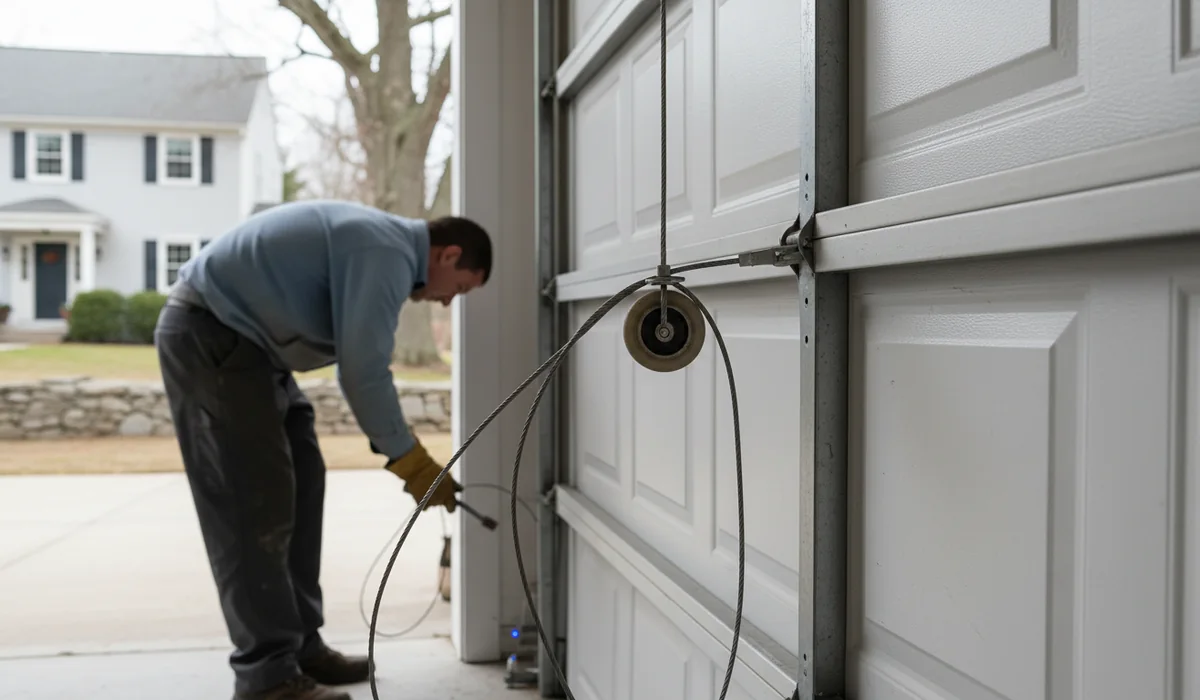
A garage door that’s crooked, jammed, or hanging out of its tracks is one of the more dangerous things that can go wrong with a door. The good news is that the safe response is simple. The bad news is that it doesn’t include fixing it yourself.
Do this right now
- Stop. Don’t press the opener button again.
- Unplug the opener so nobody runs it by accident.
- Leave the door where it is. Don’t push it up, pull it down, or try to tap the rollers back into the track.
- Keep everyone clear, including kids, pets, and cars. If the door is partly open, don’t walk or drive under it.
- Look from a distance so you can describe it: which side is lower, whether a cable is loose, whether a spring looks broken.
- Call a garage door company and describe what you see.
Why you shouldn’t force it back on
A sectional garage door rides on rollers in two steel tracks and is lifted by two cables that wind onto drums at the top, with springs carrying the weight. When a door comes off track, it’s almost always because one of those parts failed:
- A cable slipped off its drum or snapped, so one side of the door is no longer held up.
- A spring broke, letting the cables go slack or one side drop.
- The track got bent, often by a car bumper or snowblower.
- Rollers wore out or track brackets loosened.
In the first two cases, the door’s weight isn’t controlled. Pushing the rollers back in or running the opener can make the door twist, drop, or swing. The cables and the bottom brackets they attach to are also under spring tension. That’s why the industry treats this as a technician job.
What the technician does
A technician will usually clamp the door in the track so it can’t move, then find out why it came off. The repair might be re-spooling or replacing the cables (as a pair), replacing a broken spring, straightening or replacing a bent track section, replacing worn rollers, or replacing a cracked bottom section. Then the door is set back in the track, balanced, and tested with the opener. Our off-track and cable repair page covers the details.
What it costs
HomeAdvisor’s June 2026 cost data puts cable repair at $100 to $400 and track repair at up to $400, with simple realignment at the low end. If a spring broke and caused the problem, add spring replacement at $150 to $350. If the door twisted badly enough to crack a section, panel repair runs $250 to $1,000. Connecticut quotes usually land in the upper half of national ranges, and evening or weekend calls cost more.
Preventing it next time
- Watch the cables. Frayed or rusty strands near the bottom brackets are a warning; in Connecticut, road salt and slush attack that spot every winter.
- Listen for changes. Grinding, scraping, or a door that shudders as it moves can mean worn rollers or a binding track.
- Don’t let the opener fight the door. If the door struggles, stop and find out why.
- Mind the bumpers. A tap on the door or track can bend it just enough to throw a roller later.
Before you hire, ask for the company’s Connecticut HIC registration number and look it up on eLicense. Our guide to checking a garage door company explains how.
The bottom line
If you need garage door help now, call (860) 791-1424 and we'll try to connect you with a participating independent garage door company that serves your area. That company inspects the door and quotes the job itself. Until then, keep people and cars out from under the door and don't touch the springs or cables.